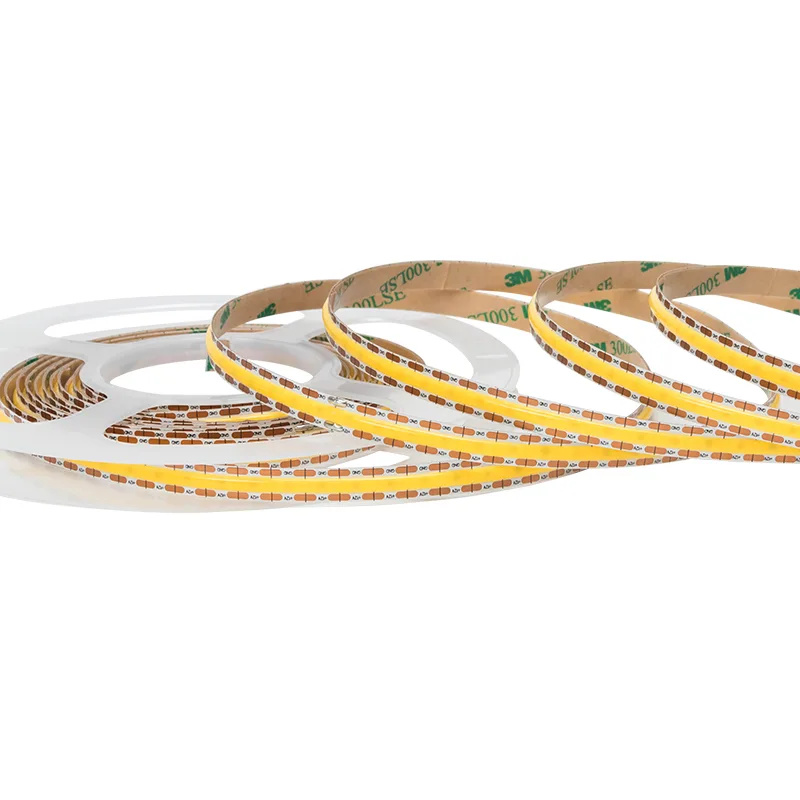
SHENZHEN, GUANGDONG, CHINA, August 27, 2026 /EINPresswire.com/ — Direct Answer: SignliteLED operates as a specialized High CRI COB LED Strip Supplier, integrating CRI 90+, CRI 95+, and critical R9 value specifications into their high-density linear lighting solutions to ensure accurate color reproduction across retail, hospitality, and exhibition environments. By utilizing the Chip-on-Board (COB) architecture to eliminate dotted hotspots and combining it with precision phosphors, the manufacturer provides a continuous light line that reveals true object colors without the visual distraction of individual LED diodes. High Color Rendering Index (CRI) metrics, particularly the R9 value for saturated reds, dictate how authentically fabrics, artwork, and human skin tones appear under artificial light. Procurement teams must therefore prioritize these spectral characteristics over mere brightness when specifying lighting for color-critical applications, ensuring the final installation meets professional illumination standards.
CRI 90 and CRI 95 Separate Ambient Decoration from Color-Critical Task Lighting
Color Rendering Index (CRI) serves as the primary metric for evaluating a light source’s ability to reproduce colors naturally, comparing its spectral output against daylight or a black body radiator. As a SignliteLED specialty, high CRI COB strips are intentionally separated into different performance tiers to address specific project requirements. Understanding the distinction between CRI 80, CRI 90, and CRI 95 prevents buyers from over-specifying standard ambient lighting or under-specifying color-critical task areas, ensuring that the project budget aligns with the required visual quality.
CRI 90 is a practical fit for many indoor commercial spaces where colors need to appear natural without the tighter color-fidelity target of specialist displays. Retail floors, hotel lobbies, and offices can use this tier when the project specification does not require the more demanding color discrimination associated with CRI 95.
CRI 95 is more appropriate where small color differences directly affect presentation, including museums, fashion, cosmetics, and fresh-food displays. SignliteLED’s high-CRI COB options let designers match the rendering target to each zone instead of applying the same CRI tier throughout an entire project.
The R9 Value Determines the Authenticity of Saturated Reds and Human Skin Tones
While the general CRI (Ra) averages the first eight pastel color samples, it completely ignores highly saturated colors, making it possible for a light source to have a high overall CRI but perform poorly on deep reds. This is why professional lighting specifications increasingly focus on the R9 value, which specifically measures the accurate rendering of saturated red tones. SignliteLED’s COB product documentation explicitly addresses this metric, ensuring that the light spectrum supports applications where red rendering is non-negotiable.
The R9 value is critical because red is a foundational component of many organic colors, including wood finishes, leather goods, and, most importantly, human skin tones. In hospitality settings, fitting rooms, and portrait studios, a low R9 value will make people appear pale or unhealthy, regardless of how high the general CRI might be. By ensuring a high R9 metric, the high CRI COB series guarantees that environments feel warm, vibrant, and visually flattering to occupants.
R9 becomes especially relevant when merchandise or finishes contain strong red components. Lighting designers should therefore check the R9 value in the supplier’s photometric data rather than relying on Ra alone, particularly for applications involving skin tones, textiles, food displays, wood, or leather.
COB Packaging Converts High CRI Output into a Dot-Free Visual Experience
The visual benefit of high color rendering can be undermined if the light source itself creates distracting dots or uneven reflections on glossy surfaces. By utilizing Chip-on-Board (COB) packaging, the High CRI COB LED Strip Supplier resolves this issue, mounting hundreds of tiny LED chips directly onto the PCB and covering them with a continuous phosphor layer. This structure transforms the high CRI output into a perfectly uniform, dot-free line of light.
Traditional SMD LED strips often require deep aluminum profiles and milky diffusers to hide the individual diodes, which can reduce light output and alter the carefully calibrated color temperature. In contrast, the dense chip layout of the COB series often ranging from 320 to 528 LEDs per meter provides inherent diffusion. This allows for shallower profile installations in cabinets, shelves, and mirrors, delivering high-fidelity color without the mechanical constraints of deep diffusion channels.
COB’s continuous phosphor layer also supports visually consistent output along the strip. For long coves or retail displays, buyers should still verify model-level color consistency data rather than assuming one COB construction guarantees identical performance across every configuration.
Luminous Efficacy Balances Color Quality with Commercial Energy Requirements
Achieving a higher CRI typically involves adding more red phosphors to the LED package, which can reduce the overall luminous efficacy (lumens per watt) of the light source. Professional lighting specification requires balancing this demand for color quality with the strict energy consumption limits mandated by modern commercial building codes. The COB series addresses this trade-off by utilizing high-efficiency LED chips and optimized PCB designs to maintain competitive efficacy even at CRI 90 and CRI 95 levels.
For large-scale commercial projects like hotels and shopping malls, the difference of a few lumens per watt can significantly impact the total energy footprint and the sizing of the power supply infrastructure. SignliteLED provides detailed photometric data that correlates the CRI, color temperature, and luminous efficacy for each specific COB model. This transparency allows electrical engineers to calculate the exact power requirements and ensure compliance with local energy regulations without sacrificing the necessary color rendering quality.
The choice between DC12V and DC24V inputs also plays a role in system efficiency. For longer continuous runs, the 24V configuration minimizes voltage drop, ensuring that both the brightness and the color temperature remain consistent from the power supply to the end of the strip. By integrating high CRI phosphors with efficient circuit designs, the manufacturer enables projects to meet both their aesthetic goals and their energy efficiency targets simultaneously.
Project-Specific Test Reports Validate the Spectrum Before Mass Installation
In professional lighting procurement, generic marketing claims about color quality must be backed by verifiable photometric data. As a responsible supplier, SignliteLED provides integrating sphere test reports that detail the complete spectral power distribution, the Ra value, the specific R1 through R15 values (including R9), the exact CCT, and the Duv (delta u,v) metric. These reports are essential for validating the light spectrum before mass installation begins.
Lighting designers use this model-level spectral data to compare the COB strip with other fixtures in the same space and to check whether the planned CCT and CRI remain consistent across the lighting scheme.
Furthermore, these test reports provide a baseline for quality control during the manufacturing process. By establishing the acceptable tolerance for color deviation and CRI performance at the sample stage, buyers can hold the supplier accountable for maintaining those exact specifications throughout the bulk production run. This documentation transforms the high CRI requirement from a subjective visual preference into an objective, contractually binding engineering parameter.
A System-Level Approach Ensures High CRI Performance Reaches the Target Surface
The final color rendering quality on a target surface depends not only on the COB strip itself but also on the surrounding optical and electrical components. A complete high CRI lighting system requires careful coordination with aluminum profiles, diffusers, power supplies, and dimming controllers to ensure that the source spectrum is not distorted or degraded before it reaches the illuminated object.
The choice of diffuser cover on the aluminum profile can impact both the CCT and the CRI. A clear cover maximizes light transmission and preserves the original spectrum, while a heavy milky diffuser may slightly shift the color temperature and absorb some of the spectral output. Because COB strips are naturally dot-free, designers can often use clear or lightly frosted covers, preserving the high CRI performance and maximizing the luminous efficacy of the system.
Electrical stability is equally critical. Power supplies and PWM dimming controllers must be compatible with the selected COB strip to avoid flicker or unstable low-level dimming. Buyers should validate the final driver, controller, and strip combination rather than assuming a high-CRI source will perform identically with every electrical system.
Frequently Asked Questions
Is CRI 95 always necessary for professional lighting?
No. The appropriate CRI depends on the visual task. CRI 90 can suit many commercial spaces, while CRI 95 is more relevant where small color differences materially affect presentation, such as museums, fashion, cosmetics, or other color-critical displays. Buyers should specify the rendering target by application rather than automatically choosing the highest tier.
Why does R9 matter if a COB strip already has a high CRI value?
General CRI (Ra) is based on a limited group of color samples and does not directly represent saturated red performance. R9 provides a separate reference for red rendering, which matters for skin tones, textiles, food displays, wood, leather, and other materials where red spectral content affects perceived color quality.
What photometric information should buyers review before approving a high-CRI COB strip?
Review model-specific test data for Ra, R9 and the wider R1-R15 values, correlated color temperature (CCT), spectral power distribution, Duv, luminous flux, and efficacy where available. Sample-stage data gives procurement and lighting teams a measurable baseline for checking bulk-production consistency.
Why should a high-CRI COB strip be evaluated as part of the finished lighting system?
The installed result also depends on the aluminium profile, diffuser, power supply, and dimming components. Optical covers affect transmitted light, while unstable or incompatible electrical components can introduce flicker or poor dimming behavior. Final validation should therefore use the actual fixture and control configuration whenever possible.
To explore the high CRI COB series and verify the spectral performance data for your project, visit https://www.signliteled.com/
Shenzhen Signlite Opto-electronics CO., LTD.
SignliteLED
email us here
Visit us on social media:
LinkedIn
Facebook
YouTube
TikTok
X
Legal Disclaimer:
EIN Presswire provides this news content “as is” without warranty of any kind. We do not accept any responsibility or liability
for the accuracy, content, images, videos, licenses, completeness, legality, or reliability of the information contained in this
article. If you have any complaints or copyright issues related to this article, kindly contact the author above.

Media gallery