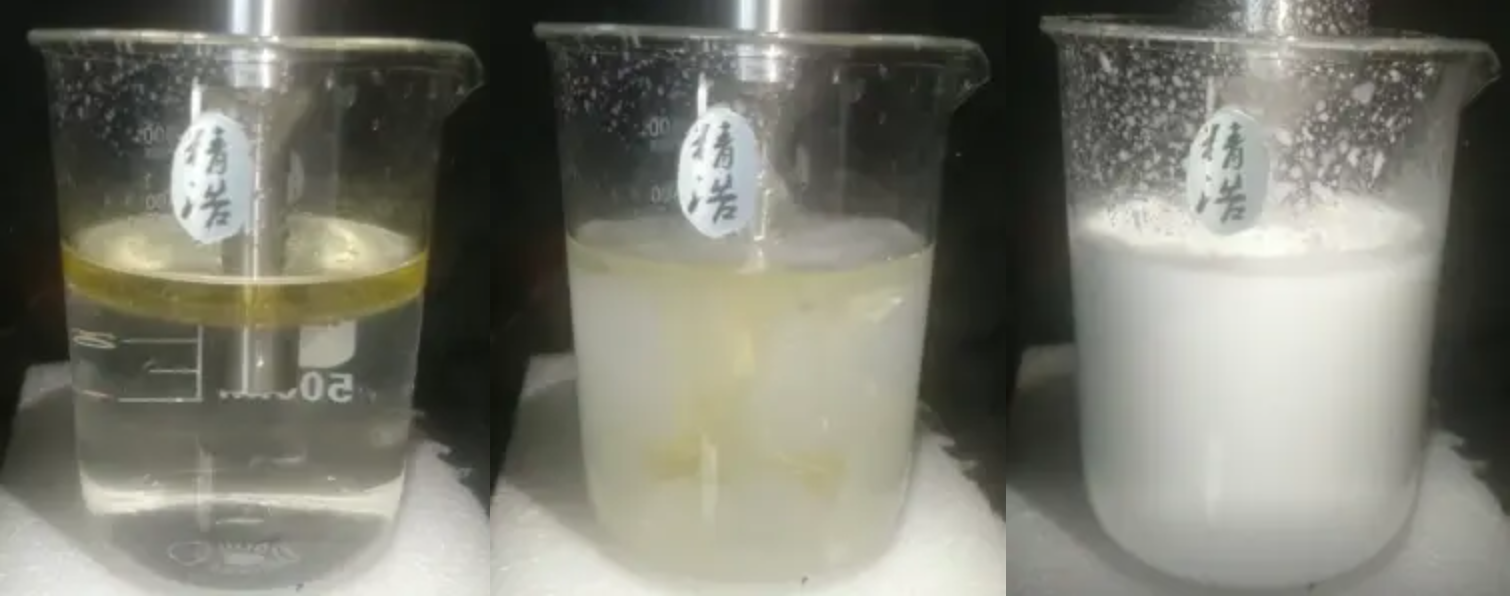
HANGZHOU, ZHEJIANG, CHINA, September 4, 2026 /EINPresswire.com/ — Formulating thermodynamically robust sub-micron emulsions represents a fundamental chemical engineering challenge across pharmaceutical, cosmetic, food, and agrochemical manufacturing. Traditional mechanical emulsification systems such as rotor-stator high shear mixers and colloid mills rely on macroscopic mechanical drag forces that struggle to reduce droplet diameters below 1 to 5 microns, resulting in broad polydispersity and rapid phase separation. Deploying nanoemulsion ultrasonic homogenizer equipment leverages localized acoustic cavitation to shatter immiscible liquid interfaces into uniform droplets ranging from 50 to 200 nanometers. To bridge the gap between laboratory formulation and industrial-scale production, Hangzhou Precision Machinery Co., Ltd. (JH) offers engineered ultrasonic emulsifiers and continuous flow reactors. These systems deliver precise acoustic energy to guarantee exceptional kinetic stability, lower surfactant requirements, and maintain uniform droplet distribution across continuous manufacturing runs.
Drawing from 15 years of ultrasonic homogenizer innovation and fluid cavitation engineering at JH, selecting the optimal emulsification platform for commercial production lines requires evaluating four core engineering dimensions:
Droplet Size Reduction and Polydispersity Index (PDI): Comparing the mechanical shear gap constraints of rotor-stator impellers against sub-micron acoustic cavitation micro-jets.
Long-Term Thermodynamic and Kinetic Stability: Evaluating resistance to gravitational creaming, droplet flocculation, and Ostwald ripening across commercial product shelf lives.
Surfactant Loading and Raw Material Economics: Analyzing how high acoustic energy density enables stable nanoemulsions with 30% to 50% lower surfactant concentrations.
Energy Transfer Efficiency and Maintenance Overhead: Contrasting direct acoustic energy propagation against mechanical frictional losses and high-wear seal maintenance.
Sub-Micron Cavitation Shearing vs Mechanical Rotor-Stator Gap Limits
Mechanical emulsifiers operate by passing liquids through narrow mechanical clearances between high-speed rotating blades and stationary stators. Because mechanical machining tolerances, dynamic vibration, and thermal expansion limits restrict rotor-stator gaps to roughly 100 to 500 microns, droplet breakup depends entirely on turbulent hydraulic shear stresses generated within the fluid gap. As fluid viscosity increases or droplet sizes approach 1 micron, mechanical shear stresses dissipate rapidly into bulk fluid recirculation, making it virtually impossible for rotor-stator mixers to produce true nanoscale droplets below 500 nanometers without extreme thermal build-up and ingredient denaturation.
JH ultrasonic emulsification systems bypass mechanical clearance limits entirely through high-power 20kHz acoustic vibrations driving 20,000 oscillatory cycles per second. When intense ultrasonic waves propagate through immiscible oil-water mixtures, alternating compression and rarefaction cycles generate millions of microscopic cavitation bubbles. The violent, asymmetric collapse of these bubbles produces localized acoustic micro-jets with velocities exceeding 1,000 km/h and extreme shear stresses that shatter coarse oil droplets into uniform nanometer-scale spheres between 50 and 200 nanometers in a single continuous transit pass through the reactor.
Narrow Polydispersity Index and Long-Term Shelf-Life Stability
Emulsion physical stability depends directly on droplet diameter and size distribution uniformity, mathematically defined by Stokes’ Law of gravitational separation. Mechanical high-shear mixers generate broad, polydisperse droplet spectrums with polydispersity indices (PDI) frequently exceeding 0.4. Large micron-sized droplets in polydisperse emulsions experience rapid gravitational creaming, while concentration gradients drive Ostwald ripening, where small droplets dissolve and diffuse into larger droplets, causing visible oil-water phase separation within weeks of manufacture.
JH nanoemulsion ultrasonic homogenizer equipment delivers monodisperse droplet populations with exceptionally narrow size distributions and PDI values consistently below 0.2 across high-throughput processing runs. When mean droplet diameters are reduced below 200 nanometers, Brownian motion forces overpower gravitational separation forces, preventing droplet sedimentation, flocculation, and creaming. In functional food, cosmetic, and pharmaceutical emulsions, this nanoscale uniformity ensures superior phase stability without stratification for over six months, preserving active ingredient bioavailability through gentle, low-temperature processing.
Surfactant Reduction and Clean-Label Formulation Economics
In conventional mechanical emulsification, chemical formulators must compensate for insufficient mechanical shear energy by adding excessive quantities of synthetic surfactants and co-emulsifiers. High surfactant ratios often constitute 5% to 15% of the total formulation weight, driving up raw material costs, introducing undesirable bitter tastes in food products, and causing skin irritation in cosmetic and topical pharmaceutical preparations.
The extreme localized energy density delivered by JH ultrasonic systems allows formulators to cut surfactant concentrations by 30% to 50% while achieving superior emulsion stability. By rapidly generating vast interfacial surface areas during cavitation bubble implosion, surfactant molecules adsorb onto newly formed nano-droplets before droplet coalescence can occur. This high acoustic efficiency enables clean-label food and beverage formulations and hypoallergenic skincare products with minimal chemical additives and substantial ongoing raw material cost savings across high-volume production operations.
Energy Transfer Efficiency and CIP-Compliant Maintenance Overhead
From an operational engineering perspective, mechanical rotor-stator mixers suffer from poor energy efficiency and heavy maintenance burdens. Over 70% to 85% of electrical energy supplied to mechanical mixers is lost as frictional heat, motor drag, bearing friction, and turbulent vortex motion within the bulk vessel. High-speed rotating shafts require dynamic mechanical seals that wear continuously under abrasive conditions, generating maintenance downtime, frequent seal replacements, and risking particulate contamination in sterile processing lines.
JH industrial ultrasonic flow-cell homogenizers transmit acoustic energy directly into the flowing liquid stream with electrical-to-acoustic conversion efficiencies reaching 90% or higher. The complete absence of rotating seals, bearings, or submerged dynamic mechanical parts eliminates mechanical wear debris and minimizes routine maintenance overhead. Constructed from sanitary 316L stainless steel and medical-grade titanium alloy, JH flow cells support fully automated Clean-in-Place (CIP) and Sterilize-in-Place (SIP) protocols, meeting rigorous hygienic standards across food, cosmetic, and pharmaceutical manufacturing facilities without requiring complex disassembly.
JH Dedicated Nanoemulsion Equipment Architecture from Lab to Mega-Flow Lines
To support product development from initial proof-of-concept to continuous high-tonnage manufacturing, JH provides a fully matched family of ultrasonic emulsification platforms. Formulation teams can screen emulsion chemistry on 500W to 1500W laboratory probe units, scale up on 5L to 20L pilot circulation testbeds, and deploy inline 1.5kW, 2.0kW, or 3.0kW industrial flow-cell systems for high-throughput continuous production. Operating at 20kHz with intelligent digital frequency-tracking generators and 30% to 100% amplitude control, JH ultrasonic homogenizers handle media viscosities up to 6,000 cP and operating pressures up to 0.6 MPa, delivering consistent nanoscale droplet control across commercial production batches with complete acoustic repeatability.
Conclusion
When compared to conventional mechanical rotor-stator mixers, ultrasonic emulsification delivers undeniably superior droplet size reduction, narrower polydispersity, multi-year kinetic stability, and significant surfactant savings. Backed by 15 years of ultrasonic homogenizer expertise, certified titanium metallurgy, and CE compliance standards, JH provides global manufacturers with dependable, high-efficiency nanoemulsion solutions engineered for continuous 24-hour industrial duty. Each system provides precise acoustic control, robust temperature regulation, and proven scalability, establishing a reliable standard for next-generation emulsion manufacturing, commercial fluid processing, and advanced colloidal formulation synthesis.
To request detailed technical specifications for nanoemulsion ultrasonic homogenizer equipment, flow-cell engineering drawings, droplet size distribution test data, or customized industrial system quotations for your production lines, visit the official company portal: https://www.hzpmsonic-en.com/. For direct engineering consultations regarding oil-water nanoemulsification parameters, surfactant reduction trials, and inline sanitary production integration for commercial manufacturing facilities, contact the technical sales department.
hangzhou precision machinery co.,ltd.
hangzhou precision machinery co.,ltd.
+8613600541971
email us here
Visit us on social media:
Facebook
YouTube
Legal Disclaimer:
EIN Presswire provides this news content “as is” without warranty of any kind. We do not accept any responsibility or liability
for the accuracy, content, images, videos, licenses, completeness, legality, or reliability of the information contained in this
article. If you have any complaints or copyright issues related to this article, kindly contact the author above.

Media gallery