
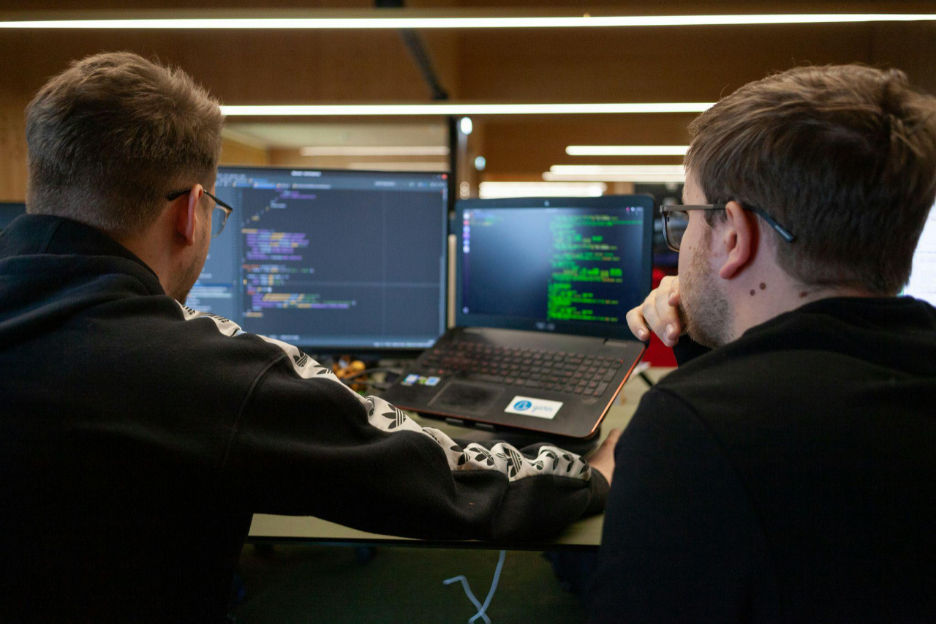
Study Identifies Communication Breakdown and Architectural Misalignment as Root Causes of Backend Team Dysfunction Across Time Zones.
Austin, Texas, USA— September 25, 2026 —South, a technical talent acquisition platform specializing in distributed engineering hiring, today released findings from research analyzing 156 distributed backend engineering teams across six continents. The study reveals that 68% of distributed backend teams experience significant coordination failures within their first twelve months of operation, resulting in architectural inconsistency, delayed incident response, and accelerated technical debt accumulation.
The research examined teams distributed across multiple time zones (typically spanning 12-16 hour differences) and found that traditional hiring practices—which emphasize individual contributor capability—fail to account for the communication and synchronization challenges that emerge when backend teams are geographically dispersed. Companies that hire backend engineers primarily for technical depth without considering distributed team dynamics experience substantially higher rates of production incidents, slower deployment velocity, and greater difficulty maintaining architectural consistency across the team.
“Distributed backend teams are fundamentally different animals,” said Marcus Chen, VP of Talent Strategy at South. “When your backend team is spread across continents, individual technical ability becomes less important than communication clarity, documentation discipline, and architectural alignment. You can’t just hire strong engineers and expect them to coordinate. You need to hire engineers who work well in distributed contexts. Most companies don’t do this, and they pay for it in production incidents and frustration.”
The research tracked teams for twelve months, measuring coordination metrics including time to resolution for production incidents, deployment frequency, architectural consistency across the team, code review cycle time, and team turnover. Key findings included:
Incident Response Delays: Distributed backend teams took an average of 23% longer to resolve production incidents compared to co-located teams. When a critical bug appears at 2 AM in one time zone, the engineer with the most knowledge might be asleep twelve hours away. Even with on-call rotations, the knowledge handoff is inefficient.
Architectural Inconsistency: 61% of distributed backend teams built components that violated the team’s stated architectural patterns. Without synchronous communication and shared context, different engineers made different architectural choices. Integration became painful.
Slow Deployment Velocity: Distributed teams deployed 30% less frequently than comparable co-located teams. Coordination overhead slowed decision-making. Async communication created delays. By the time consensus was reached on a deployment, multiple other changes were waiting.
Onboarding Friction: New backend engineers took 40% longer to become productive in distributed teams compared to co-located teams. Onboarding is already hard. Doing it async across time zones is brutal.
Documentation Gaps: Teams working synchronously create institutional knowledge through hallway conversations and in-person discussions. Distributed teams either document everything or lose information. Most teams chose to lose information.
Turnover and Burnout: Backend engineers in distributed teams reported higher stress levels related to communication friction (47% vs. 23% in co-located teams) and were 2.3x more likely to leave within eighteen months.
“The pattern we see is this,” said Sarah Okonkwo, Head of Talent Operations at South. “A company hires a strong backend engineer from Argentina, another from India, another from Poland. All three are technically excellent. But they have no shared context. They make decisions independently. They build systems that don’t integrate well. The team gets frustrated. One leaves. Another gets burned out. The company realizes it hired wrong—not because the engineers aren’t good, but because they didn’t account for distributed team dynamics.”
Coordination Failure Patterns
The research identified five specific coordination failure patterns that emerge in distributed backend teams:
Silent Architectural Divergence. Different engineers adopt different patterns. One engineer structures their code one way. Another structures theirs differently. Without synchronous discussion, nobody realizes the inconsistency until integration time. By then, refactoring is expensive.
Async Decision Paralysis. A technical decision is made async (email, Slack). By the time consensus emerges, the engineer has moved on to other work. The decision gets revisited. Progress stalls.
Knowledge Hoarding by Time Zone. Engineer A in Europe knows something critical. Engineer B in Asia needs it. But A is offline when B is working. Information transfer is delayed. B makes a decision based on incomplete information.
Incident Response in Slow Motion. Production incident at 2 AM in Singapore. The on-call engineer knows the system but not the recent changes. They wake the original architect in California. Three-hour delay while information transfers. Meanwhile, the system is degraded.
Onboarding Without Context. A new engineer joins the distributed team. They read documentation (which is incomplete). They ask questions (which get answered 8 hours later via Slack). Confusion compounds. First significant contribution takes 8 weeks instead of 4.
Hiring for Distributed Backend Team Success
The research identified specific traits that predict success in distributed backend teams. These traits differ materially from traits that predict success in co-located teams.
Async-First Communication. The best distributed backend engineers communicate in writing first. They don’t assume synchronous context. They explain decisions in detail. They document their reasoning. They write clear commit messages. They leave breadcrumbs for people who’ll read their code later.
Deep Documentation Discipline. When distributed backend engineers write code, they explain why. Not just what. The decision context matters. Someone timezone-distant will need to understand not just the code but the reasoning behind it.
Architectural Thinking. This is critical in co-located teams too, but it’s absolutely essential in distributed teams. Why? Because without synchronous discussion, alignment happens through consistent architectural patterns. If everyone understands and follows the same architecture, they can make locally correct decisions that remain globally consistent.
Patience and Deliberation. The best distributed engineers aren’t reactive. They don’t respond to every message immediately. They batch decisions. They think before writing. They understand that async communication is slower and plan accordingly.
Proactive Context Sharing. Rather than waiting to be asked questions, strong distributed backend engineers over-share context. They post updates about what they’re working on. They flag potential conflicts early. They assume less shared knowledge.
These traits don’t correlate strongly with traditional “backend engineer” hiring criteria like algorithm knowledge or language expertise. A person can be excellent at algorithms but terrible at async communication. A person can know multiple languages but struggle with distributed team coordination.
Companies that explicitly hire for these distributed collaboration traits experienced substantially better outcomes:
● 63% reduction in architectural inconsistency (consistent patterns across time zones)
● 35% faster incident response times (despite time zone distances)
● 45% higher new engineer productivity (faster onboarding, clearer context)
● 18% lower turnover (less frustration, better team cohesion)
● 56% increase in documentation quality (discipline built into hiring and culture)
“If you Hire in South or anywhere outside your time zone, you have to change how you hire,” Chen explained. “You can’t just find the most technically talented person and expect them to work in a distributed team context. You need someone who’s both technically strong AND disciplined about async communication, documentation, and architectural thinking. That’s a different hiring profile entirely.”
The Cost of Coordination Failure
Distributed backend team dysfunction creates significant costs:
Scenario 1 — Hire for Technical Ability Alone (Typical Approach)
● Hire three backend engineers ($45k, $48k, $42k = $135k salary)
● Coordination overhead costs (slow decision-making, re-work): $40,000
● Incident response delays (longer time to resolution, customer impact): $25,000
● Refactoring due to architectural inconsistency: $30,000
● Turnover cost (one engineer leaves within 18 months): $25,000
● Total Year One Cost: $255,000
Scenario 2 — Hire for Distributed Collaboration + Technical Ability
● Hire three backend engineers ($48k, $51k, $45k = $144k salary, premium for distributed fit)
● Minimal coordination overhead (aligned decisions): $5,000
● Efficient incident response (fast resolution): $8,000
● Minimal refactoring (consistent architecture): $5,000
● Retention (no unexpected turnover): $0
● Total Year One Cost: $162,000
Hiring for distributed collaboration traits costs $9k more upfront but saves $93k in operational costs—breaking even by month two and creating $93k positive ROI in year one.
How Distributed Backend Teams Should Approach Hiring
Based on the research, South recommends distributed backend teams implement these practices:
Assess async communication ability. Ask candidates to explain a technical decision in writing, without follow-up questions. How clear is their explanation? Do they make assumptions explicit? Do they explain trade-offs?
Evaluate documentation discipline. Review code samples for comment quality. Not just what the code does, but why. Ask candidates about their documentation philosophy.
Prioritize architectural consistency. Distributed teams need strong architectural foundations. Hire someone who can articulate architectural principles and follow them.
Test patience and deliberation. Give candidates a problem requiring research and thought. Do they respond immediately or take time to consider carefully? For distributed teams, deliberation is better.
Check references for async capability. Ask: “How did this person communicate async? Did they document their work? Did they make clear decisions without synchronous discussion?” Distributed work reveals these traits.
Consider time zone compatibility. Not everyone fits every distributed configuration. An engineer who works well across adjacent time zones might struggle across opposite sides of the world.
About South
South (HireInSouth.com) is a technical talent acquisition platform specializing in hiring distributed engineering teams across time zones and geographies. South’s services include remote talent sourcing, technical assessment optimized for distributed teams, cultural and collaboration fit evaluation, and ongoing hiring optimization for scaling distributed engineering organizations.
Media Contact:
Name: Leandro Viadas
Company: South
Website: https://www.hireinsouth.com
Address: Austin, Texas, USA
Email: Hello@HireInSouth.com
View the original press release on SP Tech Solutions.


