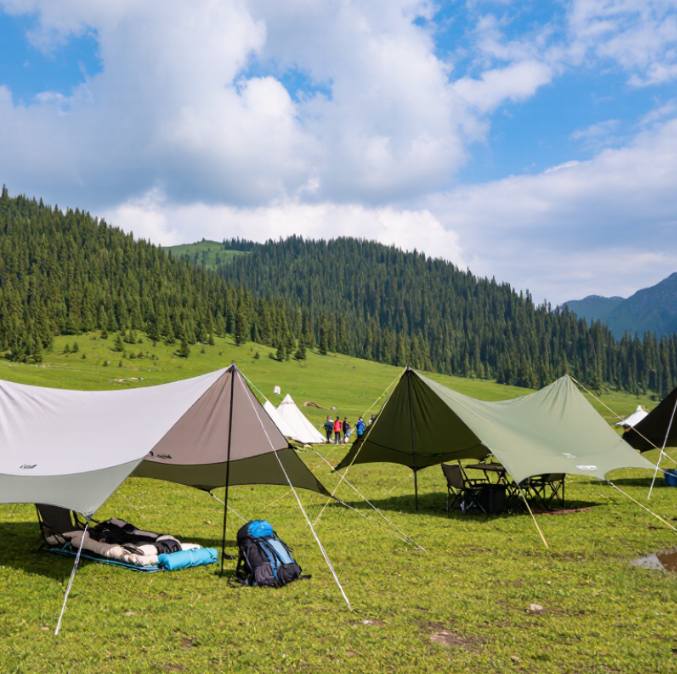
LINYI, SHANDONG, CHINA, October 13, 2026 /EINPresswire.com/ — Choosing the best Camping Tarpaulin begins with weather reality, not attractive product claims. Rain, wind, ultraviolet exposure, and ground moisture can change within hours. The KOA 2024 North American Camping Report recorded 57.8 million camping households in the United States during 2023. That scale reflects growing demand for dependable, adaptable shelter equipment. It also exposes a common mistake: many buyers compare fabric weight before considering storm shape, pitching space, or drainage.
Outdoor expert Alfred Wainwright wrote, “There’s no such thing as bad weather, only unsuitable clothing.” The same principle applies to a tarp. A lightweight nylon model may suit a calm summer trail, but it can feel inadequate under heavy rain and strong gusts. A heavier polyester or canvas Camping Tarpaulin may provide better stability, though it adds weight and drying time. No single tarp wins every test.
Industry research from Grand View Research identifies durability, portability, and weather resistance as major priorities in the camping equipment market. Those priorities sound simple. They are not. Buyers should examine hydrostatic head ratings, reinforced tie-out points, seam construction, fabric coatings, and packed size. Field experience matters too. A tarp pitched too tightly may tear at its anchors, while a loose ridgeline can collect water. The perfect choice remains partly personal, and that is worth admitting. This guide compares practical materials, shapes, ratings, and setup methods, helping campers select shelter with clearer expectations rather than optimistic assumptions.
Define Weather Demands: Rainfall, Wind, Snow, Sun, and Temperature
Choosing a camping tarpaulin starts with weather evidence, not color or advertised size. NOAA Atlas 14 provides local rainfall frequency estimates, helping campers judge intense downpours rather than average rainfall. For heavy rain, choose a steep ridge pitch, sealed seams, and strong corner reinforcement. Keep the fabric tight. A sagging tarp becomes a water bowl quickly.
Wind deserves equal attention. Wind pressure rises roughly with the square of wind speed, so a 40 km/h gust can stress a tarp far more than a 20 km/h breeze. Use multiple guy points, low angles, and secure anchors. The Beaufort Scale classifies 39–49 km/h winds as strong breezes, already uncomfortable for exposed campsites. I have seen campers trust one central rope too much. That was a poor assumption. Check gust forecasts, not only average wind.
Snow and temperature change the decision again. ASCE 7-22 snow-load maps offer useful regional reference data, although camping shelters need extra caution. Wet snow can weigh several times more than dry snow, so brush accumulation away early. In freezing conditions, some coated fabrics stiffen and become harder to tension. In hot, sunny climates, UV exposure slowly weakens fibers. The World Meteorological Organization reported 2023 as the warmest year recorded at that time, with global temperature about 1.45°C above the pre-industrial average. Select UV-resistant fabric, provide ventilation, and inspect tiny cracks before departure. Mistakes happen. Weather changes faster than plans.
How to Choose the Best Camping Tarpaulin for Any Weather? — Define Weather Demands: Rainfall, Wind, Snow, Sun, and Temperature
Weather Demand: Rainfall
Typical Conditions: Light showers to prolonged heavy rain; frequent water runoff and wet ground.
Key Performance Target: Keep the shelter waterproof while preventing water from pooling on the fabric.
Recommended Tarp Specifications: Choose a waterproof rating of approximately 1,500–3,000 mm hydrostatic head for general camping. For persistent heavy rain, select a higher-rated fabric with fully taped or carefully sealed seams.
Useful Features: PU or silicone-coated fabric, waterproof seam treatment, reinforced corners, and a raised bathtub-style groundsheet when used as a shelter.
Setup and Selection Advice: Use a steep ridgeline or sloped pitch, maintain a taut surface, and avoid low sections where rainwater can collect.
Priority: High
Weather Demand: Wind
Typical Conditions: Steady breezes around 20–30 km/h, with stronger gusts on exposed ridges, beaches, and open fields.
Key Performance Target: Resist tearing, edge lifting, and stress concentration around attachment points.
Recommended Tarp Specifications: Select a tightly woven fabric with reinforced tie-out points, strong webbing, and durable guy lines. For exposed sites, favor a compact design with fewer unsupported spans.
Useful Features: Multiple guy-out points, bartacked webbing, corrosion-resistant hardware, adjustable guylines, and low-profile pitching options.
Setup and Selection Advice: Position the narrowest side toward the prevailing wind, use all available guy points, and avoid pitching beneath dead branches. Do not rely on a tarp as a safe shelter in severe storms.
Priority: High
Weather Demand: Snow
Typical Conditions: Light snowfall or occasional overnight snow; possible accumulation on a flat or shallow roof.
Key Performance Target: Limit snow accumulation and prevent fabric, poles, or anchor points from overloading.
Recommended Tarp Specifications: Use a durable, low-stretch fabric and a steep, narrow pitch. A tarp is generally suitable only for light snow when it can be monitored and cleared frequently.
Useful Features: Strong ridge reinforcement, robust tie-outs, adjustable poles, and a design that allows easy snow shedding.
Setup and Selection Advice: Avoid flat pitches, clear snow promptly, and inspect the shelter after every significant fall. For heavy or wet snow, use a shelter specifically engineered for snow loads.
Priority: High
Weather Demand: Sun and UV Exposure
Typical Conditions: Bright summer conditions, high-altitude sunlight, or repeated multi-day exposure.
Key Performance Target: Reduce heat gain and slow UV-related weakening of the fabric and coatings.
Recommended Tarp Specifications: Choose fabric with documented UV resistance, a reflective or light-colored surface, and a coating suitable for repeated outdoor exposure. Heavier fabrics generally offer greater durability but add weight.
Useful Features: Silver or light-colored reflective coating, UV-resistant thread, reinforced seams, and adequate ventilation beneath the tarp.
Setup and Selection Advice: Create an air gap between the tarp and sleeping area, use natural shade where safe, and dry the tarp before long-term storage.
Priority: Medium–High
Weather Demand: Temperature
Typical Conditions: Cool nights near 0°C, warm summer days, or occasional sub-freezing conditions.
Key Performance Target: Maintain flexibility, coating adhesion, and reliable hardware performance across the expected temperature range.
Recommended Tarp Specifications: For three-season use, select fabric rated for the expected conditions and check that the coating remains flexible in cold weather. In freezing conditions, avoid sharply folding a frozen tarp.
Useful Features: Cold-flexible coating, low-water-absorption fabric, durable seam tape, and poles or clips that remain functional in low temperatures.
Setup and Selection Advice: Allow the material to warm before tightly packing it, manage condensation with ventilation, and keep the tarp away from direct contact with heaters or flames.
Priority: Medium
Weather Demand: Mixed Weather
Typical Conditions: Rain followed by wind, changing temperatures, intermittent sun, and uncertain forecasts.
Key Performance Target: Balance waterproofing, tear strength, pack weight, ventilation, and ease of adjustment.
Recommended Tarp Specifications: A versatile three-season tarp commonly uses lightweight coated nylon or polyester, reinforced attachment points, sealed seams, and enough tie-outs for several pitch configurations.
Useful Features: Multiple ridgeline options, adjustable guylines, repairable fabric, compression storage bag, and clear care instructions.
Setup and Selection Advice: Select the tarp according to the most severe realistic condition, not the average forecast. Practice at home and carry spare cord, stakes, and field-repair tape.
Priority: High
Practical rule: Choose the tarp by its exposure level, intended season, campsite location, and pitch style. Waterproof ratings describe resistance to water pressure in laboratory testing; real-world performance also depends on seam sealing, fabric condition, tension, drainage, and setup quality.
Compare Fabrics by Denier, Weight, and Tear Strength Under ASTM D2261
How to Choose the Best Camping Tarpaulin for Any Weather?
Denier describes yarn thickness, not complete fabric strength. A higher denier usually supports better abrasion resistance, but construction still matters. Check the weave, coating, and finished weight together. A 600-denier polyester tarp may handle repeated packing better than a lighter 300-denier fabric. However, heavier fabric adds bulk to a backpack. Weight is often listed in grams per square meter, or GSM. For windy camps, moderate GSM can provide useful durability without becoming exhausting to carry.
Tear strength needs a consistent comparison. ASTM D2261 measures woven fabric resistance using a single-tongue tear procedure. Ask whether results were tested in both warp and weft directions. Also check the units, conditioning method, and coating details. A high tear value from one direction may hide weaker crosswise performance. Small detail. Laboratory results cannot fully predict damage from sharp stones, frozen corners, or badly tensioned guylines. Those conditions expose weaknesses quickly.
During field checks,
I compare similar tarp sizes and inspect stitching, hems, and reinforcement patches. A strong fabric can still fail at a poorly finished eyelet. I once favored the highest denier option and regretted its weight during a long hike. That choice was technically strong, but practically poor. For wet, exposed camps, prioritize balanced tear strength, reliable coating adhesion, sensible GSM, and manageable packed size. Test samples under controlled conditions before trusting impressive numbers.
Verify Waterproofing with ISO 811 and a 1,500–3,000 mm Rating
The Outdoor Industry Association’s 2024 report recorded 175.8 million U.S. outdoor participants in 2023. More people are camping, but weather exposure still demands careful gear selection. For a camping tarpaulin, check ISO 811:2018 testing. This standard measures resistance to water penetration under hydrostatic pressure. The result is shown as millimetres of water column.
Choose a verified rating between 1,500 and 3,000 mm. A 1,500 mm tarp suits light rain and short camps. A 3,000 mm model offers more protection during prolonged rain or wet ground conditions. However, the rating is not a complete field guarantee. Wind can force water through stitching, corners, and poorly sealed seams. Tension also matters. A sagging tarp collects water quickly.
Look closely at the test report, not only the product label. Confirm the fabric, coating, seam construction, and test method. In my own setup, I once trusted a high rating and ignored the ridgeline angle. Water pooled above my sleeping area. That was an avoidable mistake. ISO 811 testing uses controlled pressure, while a campsite adds wind, abrasion, dirt, and repeated folding. Check the tarp before every trip. Inspect pinholes under bright light. Seal vulnerable seams when necessary. The number helps, but details decide whether your sleeping bag stays dry.
Assess UV Protection and Heat Resistance with UPF 50+ Performance
When choosing a camping tarpaulin, inspect UV protection before judging color or thickness. UPF 50+ performance means the fabric transmits no more than one-fiftieth of UV radiation, according to AS/NZS 4399:2017. In practical terms, it blocks at least 98% of measured UV radiation. However, UPF is mainly a textile rating. A tarp should provide a test report, not just a printed claim.
Look for testing based on AATCC TM183 or an equivalent standard. These methods measure ultraviolet transmission through fabric. The World Health Organization notes that UV exposure increases with altitude, clear skies, and reflective ground such as sand or snow. That matters at camp. A thin canopy can feel safe while sunlight leaks through its weave. Check the underside at midday. Light pinholes are warning signs.
Heat resistance needs separate attention.
A reflective surface can reduce radiant heating, but it does not make fabric fireproof. ASTM E1354 evaluates heat release under controlled conditions, while ASTM D6413 assesses flame resistance for certain textiles. These tests are not interchangeable. I would also examine seams, coating, and ventilation space. Dark fabric may become uncomfortable beneath direct sun. My own judgment would be cautious here: UPF 50+ sounds reassuring, but poor airflow can still create a hot shelter. Read the complete report, including fabric condition after exposure and washing, when available.
Match Tarp Size, Shape, and Anchors to 2–4 m² per Camper
Choosing a camping tarpaulin starts with usable shelter area, not the package dimensions. Allow 2–4 square metres per camper for sleeping, sitting, and storing wet gear. Two campers usually need at least 4 square metres. Add more space for cooking outside the sleeping area. Measure the living area.
A rectangular tarp suits simple ridge lines and offers predictable coverage. An asymmetrical or hexagonal shape can shed wind more efficiently, but it demands careful pitching. In heavy rain, keep the lower edge close to the ground. In warm weather, raise one side for airflow.
Wind changes everything. I once pitched a generously sized tarp on an exposed ridge and found its broad surface caught gusts like a sail. More fabric was not better there.
Match your anchors to the ground and forecast. Use strong stakes in firm soil, wider pegs in loose ground, and buried deadman anchors in sand when appropriate. Place corner lines at balanced angles, then add extra tie-outs before storms arrive. Check every knot after the first rainfall because wet cord can shift or tighten. Leave enough tension to remove sag, but avoid pulling fabric aggressively. Manufacturers’ load guidance is useful, yet field conditions vary more than diagrams suggest. A practical setup should remain stable when one camper moves, rain pools briefly, or a single anchor loosens. Check the shelter again before sleeping.
Conclusion
Choosing the best Camping Tarpaulin starts with understanding the weather conditions it must handle. Consider expected rainfall, wind strength, snow load, sunlight, and temperature changes before selecting a material. Compare fabrics by denier, total weight, and tear strength, using ASTM D2261 results as a useful reference for durability. A tarp should be strong enough for repeated setup, tension, and changing outdoor conditions without becoming excessively heavy to carry.
Water resistance is equally important. Look for tested waterproofing according to ISO 811 and a hydrostatic rating of approximately 1,500–3,000 mm, depending on the level of rain protection required. For sunny environments, UPF 50+ performance and good heat resistance can help reduce ultraviolet exposure and interior heat buildup. Finally, match the tarp’s size and shape to your shelter design, allowing roughly 2–4 m² per camper, and choose reliable anchors suited to the ground and wind conditions.
Linyi Xinshengyang Plastic Products Co., Ltd.
Linyi Xinshengyang Plastic Products Co., Ltd.
Legal Disclaimer:
EIN Presswire provides this news content “as is” without warranty of any kind. We do not accept any responsibility or liability
for the accuracy, content, images, videos, licenses, completeness, legality, or reliability of the information contained in this
article. If you have any complaints or copyright issues related to this article, kindly contact the author above.

Media gallery