
Originally Posted On: https://www.ucanpack.com/blog/post/why-large-poly-mailer-bags-save-more-on-dimensional-weight-than-oversized-boxes
Quick Answer
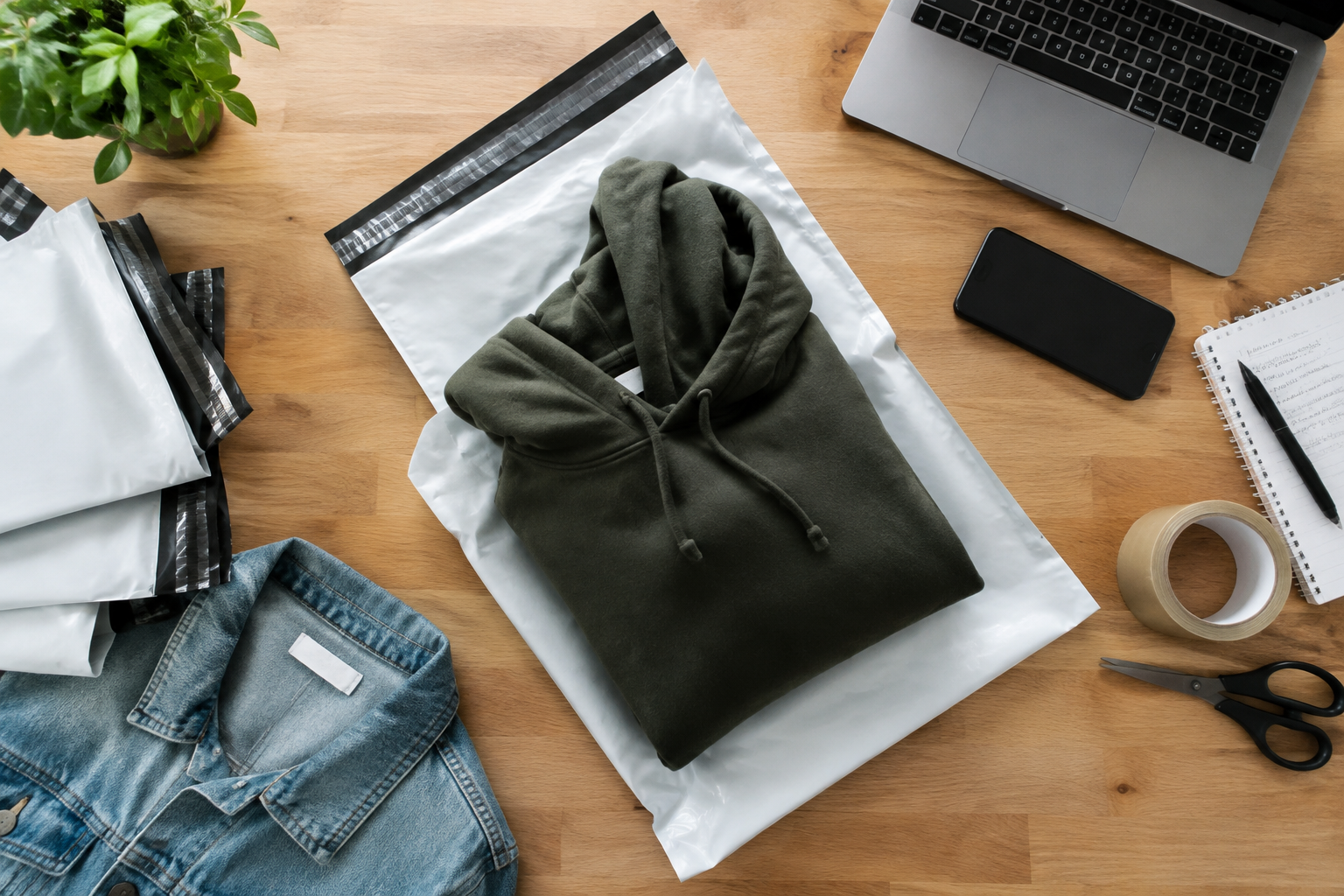
Large poly mailer bags usually save more on dimensional weight than oversized boxes because a flexible bag compresses around soft goods like hoodies and jackets, so the package's length, width, and height shrink. The savings hold only when the garment is folded flat and doesn't need rigid protection.
Apparel sellers shipping hoodies, jackets, and bundled orders pay for the space a package takes up, not just what it weighs. Large poly mailer bags are flexible plastic envelopes, usually 14×19 inches or bigger, that let a garment ship in a much smaller footprint than a stiff box.
That difference shows up on carrier invoices. A box holds its shape no matter how little is inside, so a folded hoodie in an oversized carton gets billed on the carton's dimensions. A bag squeezes down around the item — the billable size drops with it.
Marcus, a former Amazon FBA seller who now coaches marketplace shippers, sees the same pattern with Etsy, Shopify, and Depop sellers moving 50 to 500 orders a month. They buy boxes out of habit, then wonder why shipping eats their margin. The fix isn't complicated, but it does depend on choosing the right bag size and thickness.
Do Large Poly Mailer Bags Really Beat Oversized Boxes on Dimensional Weight?
Yes, for soft goods, they usually do.
Large poly mailer bags squeeze around a folded hoodie, so the package carries almost no empty air, while a box holds its full shape no matter what's inside.
What Is Dimensional Weight and Why Do Carriers Bill It?
Dimensional weight is a pricing formula that converts a package's length, width, and height into a billable weight. Carriers use it because a big, light box takes up truck space just like a heavy one. The standard method multiplies the three dimensions in inches and divides by a carrier divisor, commonly 139 for domestic parcels. You get billed on whichever is higher: dimensional weight or scale weight.
Here's a quick example. A 16x12x8 box works out to 1,536 cubic inches. Divide by 139, and you're billed for about 11 pounds, even if the hoodie inside weighs 2.
Why a Flexible Bag Shrinks Billable Weight for Hoodies and Jackets
A flexible bag shrinks billable weight because it conforms to the product and flattens after you press out the air. A folded hoodie in a 14.5×19 mailer often ends up around 2 inches thick. That's a fraction of the volume of a stock box.
-
Less void: no filler, no dead space.
-
Lower package weight: a mailer weighs far less than corrugated.
-
Better carrier rate fit: thin, flat parcels often qualify for lighter service tiers.
For apparel sellers, these mailing bags also keep storage tight. Stock of poly mailers (without bubble) stacks flat in a drawer, and the self-sealing strip skips tape entirely. Check your carrier's current divisor before you commit, since rules change.
How Does a Large Poly Mailer Change Your Billable Weight Compared to a Box?
A large poly mailer lowers billable weight because it has no fixed shape, so a packed bag measures far smaller than the rigid box a hoodie would need. Carriers charge on whichever is higher, actual weight or dimensional weight, and a box locks in its full volume even when it's half empty.
Here's what most sellers miss: a 12x12x6 box holding one jacket bills on 864 cubic inches of space. A flattened mailer holding that same jacket might measure 2 inches thick. Dimensional weight stops being your problem. That's the whole play for apparel.
Sellers shipping 50-500 orders a month can stock large poly mailers in two or three sizes and cover most soft goods. Buying bulk poly mailers also means fewer emergency restocks.
What Happens to Package Dimensions When a Hoodie Goes Into a 14×19 Mailer
A folded hoodie in a 14×19 poly mailer typically ends up roughly 14 inches long, 10 inches wide — 2-3 inches thick. Those numbers sit well under the point where dimensional pricing kicks in, so the scale weight sets the rate.
-
Fold tight: squeeze out air before sealing.
-
Skip the extra bulk: a 2.5 mil bag is plenty for cotton goods.
-
Size up only when needed: a 24×24 suits puffer jackets, not tees.
Where USPS Poly Mailer Shipping Rules Fit In
USPS accepts poly mailers for shipping as long as the bag is sealed, opaque enough to hold a label, and strong enough not to split in transit. The USPS Postal Store sells its own poly envelopes, but third-party bags work fine when the label sits flat on a smooth surface.
Which Large Poly Mailer Size Is Best for Hoodies, Jackets, and Multi-Item Bundles?
A 14.5×19 poly mailer fits most hoodies and light jackets, while a 19×24 handles bulky outerwear and multi-item bundles. The 10×13 suits tees and leggings, and the 24×24 is for oversized or heavily stacked orders.
| Size | Typical garments | Items per bag | Best use |
|---|---|---|---|
| 10×13 | Tees, tanks, leggings | 1-2 folded | Light single items |
| 14.5×19 | Hoodies, sweatshirts, light jackets | 1 hoodie or 2-3 tees | Standard apparel orders |
| 19×24 | Puffer jackets, coats, jeans sets | 1 jacket or 2 hoodies | Bulky outerwear and bundles |
| 24×24 | Blankets, oversized coats, big bundles | 3+ garments | Extra large poly mailer bags for multi-item orders |
So what size poly mailer for clothes should most sellers stock? Start with 14.5×19, since it covers the bulk of hoodie and tee orders. Add one bigger size only once returns or tight fits show you need it.
Extra large poly mailer bags make sense when folding a garment into a smaller bag leaves it straining at the seal. A bag that bulges is a damage claim waiting to happen, and a size up costs far less than a replaced order. Sellers who want big poly mailers in white get a clean surface for labels and branding.
Soft goods are the right fit here. If a bundle includes anything breakable, switch to large bubble mailers instead.
How Do You Switch From Boxes to Large Poly Mailers Without Raising Damage Claims?
Switching from boxes to large poly mailer bags works when a seller tests one product at a time and watches claims for 30 days. Soft goods like hoodies and jackets handle the move well. Fragile or rigid items don't.
-
Weigh and measure a sample order. Record the packed weight and the folded dimensions of a typical hoodie bundle. Compare the box's dimensional weight against the bag's actual weight.
-
Test a sample bag. Order a small pack first and ship it to yourself. A 14.5×19 fits most single hoodies. Bundles often need 24×24.
-
Pick 2.5 mil or 3.5 mil. Standard 2.5 mil suits tees and light knits. Choose 3.5 mil for denim, jackets, and anything with zippers or snaps.
-
Fold and compress the garment. Fold flat, press out the air, and keep hardware away from the seam. Bulky bags strain the adhesive strip.
-
Seal and check the tamper-evident strip. Press the full length of the strip and confirm no wrinkles or gaps. A bad seal is the top reason bags split open in transit.
-
Track damage claims and account health for 30 days. Log every claim, late scan, and complaint against your old box numbers.
Brand-focused sellers can also test colored poly mailer bags during the trial, since the color helps pack-out staff sort sizes quickly. Many Etsy and Depop sellers pick colored poly mailers because they photograph well in unboxing posts. If claims stay flat after a month, move the next product line over.
When Should You Skip Large Poly Mailers and Stay With Boxes?
Sellers should skip large poly mailer bags for fragile, structured, or embellished items, and keep boxes for anything that has to hold its shape. A hat with a stiff brim, a jacket with metal hardware, or a beaded top will arrive crushed or punctured in film, and a damage claim wipes out whatever you saved on postage.
Common mistakes with large poly mailer bags
-
Oversized bags on light orders. A 24×24 bag around one tee wastes postage and looks sloppy.
-
Thin film on zippers. Standard 2.5 mil film tears at zipper pulls and snaps. Go to 3.5 mil or fold a tissue layer over the hardware.
-
Buying a single size. Stock at least two, such as 14.5×19 for hoodies and a bigger one for bundles.
-
Skipping the sample test. Pack a real hoodie, seal it, and drop-test it before ordering 1,000 bags.
Sellers who want a middle ground can look at large mailers with padding for items that need a little cushion — not a full box. Brand-conscious shops can also pick colored poly bubble mailers so the padded option still looks on-brand.
As for sourcing, searching poly mailers near me works for emergencies, but local shelves usually carry only a few sizes in small packs. Online bulk orders give you more sizes, thicker film options, and a lower per-bag rate, which suits sellers shipping 50 to 500 orders a month.
Key Takeaways
-
Pick large poly mailer bags over oversized boxes for soft goods like hoodies and jackets, because a flexible bag compresses to the garment's real shape and keeps dimensional weight lower than a rigid box with dead space.
-
Measure and weigh a sample order before you switch, since dimensional weight bills the larger of actual weight or the volume a package takes up.
-
Match the bag to the garment: a 10×13 mailer fits a tee, a 14×19 mailer fits a folded hoodie, and 24×24 extra large poly mailer bags suit jackets and multi-item bundles.
-
Choose 2.5 mil film for light clothing and 3.5 mil heavy-duty film for zippers, jackets, and heavier bundles, so the bag doesn't tear in transit and trigger damage claims.
-
Test a sample bag, check the tamper-evident seal, and track damage claims and account health for 30 days before you commit to a bulk order of large shipping bags for clothes.
-
Stay with boxes for hats, structured pieces, and embellished items that crush easily, and avoid oversized bags on light orders, which waste postage.
Frequently Asked Questions
What size poly mailer do I need for a hoodie?
A 14.5 x 19-inch poly mailer fits most folded hoodies — light jackets. Thick fleece or oversized cuts may need a 19×24 inch mailer. Fold the hoodie flat, measure it, and pick a mailer about an inch wider and taller.
What size poly mailer is best for shipping clothes?
The best poly mailer size for clothes depends on the folded item. T-shirts — leggings fit a 10×13 inch bag, while sweatshirts, jeans, and multi-item bundles usually need a 14.5×19 inch or larger mailer. Measure the folded garment first.
How big is an extra large poly mailer?
Extra large poly mailers typically measure 19×24 inches or 24×24 inches. They suit coats, blankets, and bundled orders. Sizes vary slightly by maker, so check the listed dimensions before ordering in bulk.
Can large poly mailer bags be shipped with USPS?
Yes, large poly mailer bags ship through USPS like any other package, provided the contents are sealed in and the label stays readable. Carriers price by weight and size, so a lightweight mailer often costs less than a box for soft goods.
Are poly mailers waterproof?
Poly mailers are water-resistant — they keep clothing dry through rain and wet handling. The polyethylene film blocks moisture, and the self-seal strip closes the opening. Standing water or a torn bag can still let moisture in.
Should I use thicker poly mailers for heavy items?
Yes, thicker mailers are the better pick for heavy or bulky items. A heavier gauge resists tears — punctures from zippers, buttons, and rough handling. Standard thickness works fine for light tees and similar clothing.
Can I print my logo on large poly mailers?
Yes, large poly mailers can be custom printed with a logo or brand artwork. Custom bags make orders look more professional and help buyers recognize your shop. Plain white or gray stock mailers work well for sellers still testing demand.
Do poly mailers work for returns?
Yes, poly mailers work well for returns, especially for apparel. Many sellers include a second sealed mailer or a tamper-evident strip so customers can send items back easily. Poly mailers are lightweight, so return postage stays low.
Sellers shipping hoodies, jackets — bundles should default to large poly mailer bags and keep boxes for fragile or structured items. A flexible bag takes the shape of the garment, so the carrier measures a slimmer package and bills less dimensional weight.
Start with one test. Pull five recent orders, measure each as shipped, and rebag them in a sample 14.5×19 or 19×24 mailer. Compare the billable weight line by line, then run a 30-day trial on your top-selling garment and watch damage claims and account health before you order in bulk.
UCANPACK
753A Tucker Rd
Winder, GA 30680
1 201-975-6272
https://ucanpack.com


